Steve Jobs' pocket music player turns 25 years old
Twenty-five years ago, Apple launched a $399 device that fit 1,000 songs into a space no bigger than a deck of cards.
By Kendra Konchanuk ·
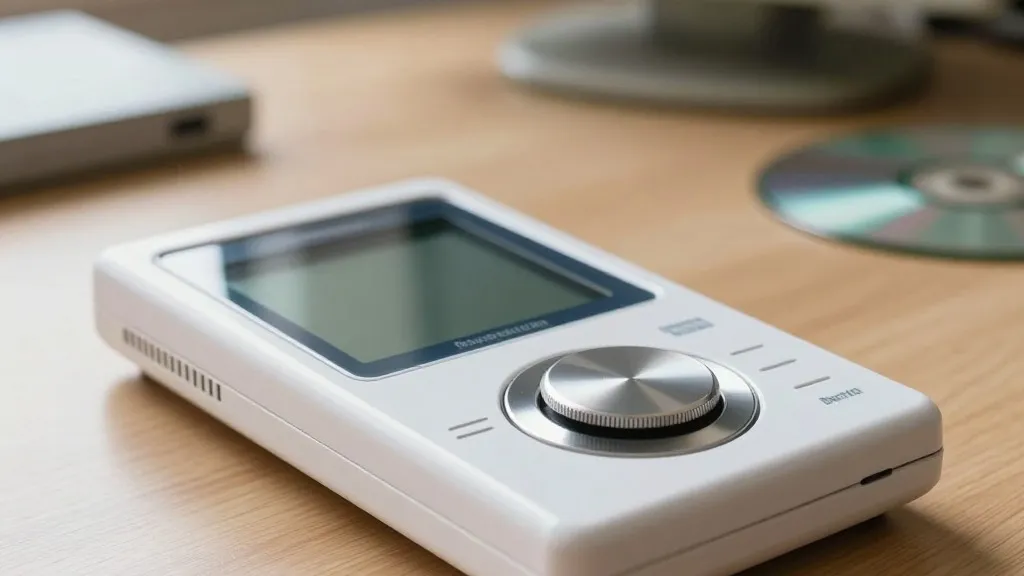
Apple CEO Steve Jobs unveiled a compact digital music player on this day in 2001, introducing a device that would dominate personal audio for over a decade. The original iPod was priced at $399 and promised to store a user's entire music collection in a form factor smaller than a standard cell phone. At the time, the gadget was a significant leap forward, offering 5 gigabytes of storage that could hold approximately 1,000 pop songs encoded at 160Kbps. It became the primary way people carried their audio libraries until smartphones eventually made dedicated music players obsolete.
To understand why this launch was so significant, it helps to look at the state of the tech industry just before the dot-com bubble burst. By October 2001, Jobs had already guided Apple out of a difficult period. The company had successfully transitioned to the Mac OS X era, and products like the iBook and iMac were selling well. Jobs envisioned the Mac as the central hub for a user's digital life, connecting everything from cameras to DVD players. He believed that portable music was the missing piece of that puzzle because music was a universal passion, yet the market lacked a clear leader.
When the iPod was announced, the market was already crowded with portable digital options. Companies like Sony, Creative, and Sonic Blue had their own players, and consumers could choose between CD players, MP3 CD players, flash-based devices, or hard-drive jukeboxes. Jobs argued that none of these rivals had truly figured out the recipe for digital music. He identified the hard-drive-based player as the best entry point for Apple, leading to the development of a device that offered CD-quality sound and support for popular formats like MP3, WAV, and AIFF.
The physical design of the first iPod was a major selling point. It measured 2.4 by 4 by 0.78 inches and weighed just 6.5 ounces, making it lighter than most cell phones of that era. This compact size was only possible thanks to a new 1.8-inch hard drive from Toshiba, which was 0.2 inches thick. The device was marketed as being the size of a deck of cards, a claim that emphasized its portability. Despite its small footprint, it included advanced features such as 20-minute skip protection and fast file transfer capabilities.
A key technical advantage was the use of FireWire 400 for charging and data transfer. Jobs highlighted that this connection was significantly faster than the USB ports available at the time. While a USB connection might take five minutes to transfer a single CD of MP3s, the FireWire port could do it in just five to 10 seconds. Filling the entire 5GB drive with 1,000 songs took only about 10 minutes via FireWire, compared to the five hours it would take using a standard USB player. The device also featured a rechargeable lithium-polymer battery that provided 10 hours of continuous playback and could be recharged to 80% in one hour.
The user interface was designed to be intuitive and easy to use with one hand. Jobs emphasized the minimalist design and the durability of the back and sides. A standout feature was the scroll wheel, which used a piezoelectric clicker to provide tactile feedback. This allowed users to quickly navigate through playlists, artists, or specific songs. During the unveiling presentation, the first song played to demonstrate the device's capabilities was 'Building a Mystery' by Sarah McLachlan.
The third major component of the launch was the integration with Apple's software. iTunes 2 was released on the same day, introducing features like MP3 CD burning and support for the new player. The Auto-Sync feature ensured that any music library a user curated on their Mac would automatically mirror to the iPod whenever it was connected for charging or transfers. The device also functioned as a FireWire hard drive, adding utility beyond just music playback.
The first iPhone did not arrive until early 2007, more than five years after the iPod's debut. For over a decade, the two devices coexisted in Apple's product lineup. However, the iPod's relevance gradually declined as smartphones became more powerful. The last model, the 7th-generation iPod Touch, was released in May 2019. Although the product line was left largely unmaintained for a few years, Apple officially discontinued the iPod brand in May 2022, marking the end of an era that began 25 years ago.
Source: Tom's Hardware